Home › Port St. Lucie Roof Replacement Cost (2026)
Port St. Lucie Roof Replacement Cost (2026)
A roof here usually runs about $12,000 to $18,000 for a typical home, inside a wider $10,000 to $25,000 range — but material, roof size, and St. Lucie's storm history stretch that fast. Here are the real local numbers, with sources.
- Sourced local ranges
- Licensed local roofers
- Independent guide
Last updated: July 12, 2026
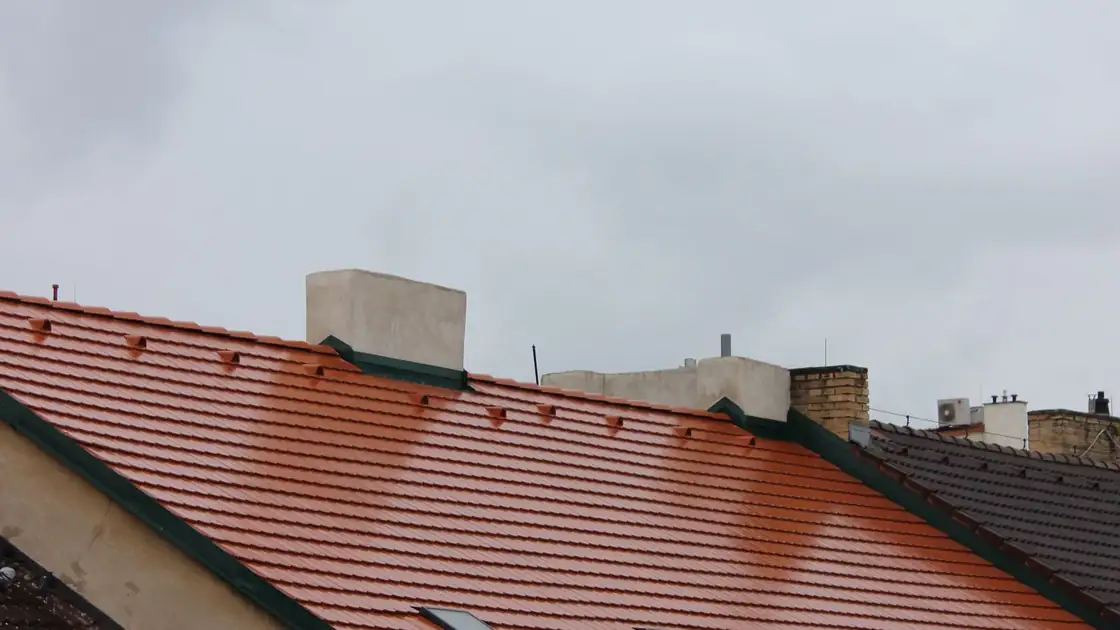
A roof replacement in Port St. Lucie usually runs $12,000 to $18,000 for a typical home, inside a wider range of about $10,000 to $25,000 (One Construction Services). Two other local estimates land in the same territory. Project Cost Atlas puts the spread at $7,560 to $22,680 with a typical job near $13,230 (Project Cost Atlas), and JA Edwards of America quotes $9,500 to $22,000 for 2026 (JA Edwards of America). What you actually pay comes down to the size of the roof, its pitch, and whether it's shingle or tile — not a national average.
In Port St. Lucie, architectural asphalt shingle — the thicker, dimensional kind — is the mass-market roof. It hits the balance most owners want: a fair price, a decent lifespan, and enough wind-resistant features to earn an insurance credit. Clay and terra-cotta tile is the older premium look you'll still see on higher-end and Mediterranean-style homes, and it costs more to buy and to replace. This isn't a roof-by-roof census, just what the local market reports show moving. If you're replacing a shingle roof, you're replacing what most of your neighbors have.
| What you’re pricing | Typical range | Source |
|---|---|---|
| Full replacement (typical job about $12,000–$18,000) | $10,000–$25,000 | One Construction Services |
| Full replacement (typically around $13,230) | $7,560–$22,680 | Project Cost Atlas |
| Full replacement, 2026 estimate | $9,500–$22,000 | JA Edwards of America |
The three sources don't agree on a single figure, and that's the point. One Construction Services centers a typical job at $12,000 to $18,000; Project Cost Atlas puts the middle near $13,230; JA Edwards runs as high as $22,000. That spread isn't error — it's the gap between a plain shingle tear-off and a cut-up or tile roof that eats more labor and costs more per square. Find the end that fits your roof, then get two or three written quotes on your real square footage.
Which end of that range is your roof?
The three estimates above disagree because none of them measured your roof. Answer 5 quick questions and licensed Port St. Lucie roofers send written quotes on your real square footage — free, no obligation.
Get Port St. Lucie roof quotes ›No phone number until step 5 · Prefer a number first? Try the cost calculator.
The 2004 one-two punch that still shapes local roofs
To understand why Port St. Lucie takes roofs seriously, go back to September 2004. Two hurricanes struck the same stretch of coast three weeks apart, and St. Lucie County took both.
Frances came first, on September 5, 2004 — a Category 2 with winds around 105 mph. It made landfall at the southern end of Hutchinson Island near Sewall's Point, just east of Stuart (NHC Frances report). St. Lucie was among the hardest-hit counties; the National Weather Service office in Melbourne tallied roughly $2.5 billion in county damage (NWS Melbourne).
Then Jeanne, on September 26, 2004 — a stronger Category 3 near 120 mph. It came ashore in essentially the same place, the southern end of Hutchinson Island east of Stuart (NHC Jeanne report). You'll sometimes read that Jeanne hit Vero Beach. It didn't — Vero is about 25 miles north. Preliminary damage in St. Lucie County ran about $1.2 billion, with surge up to six feet from Melbourne down to Fort Pierce (NWS Melbourne). Two major storms on one worn-out roof, three weeks apart, is why so much of the county was re-roofed in the mid-2000s.
That mid-2000s rebuild is a clock. A lot of those replacement roofs are now around 20 years old, right at the age where insurers start asking questions.
Irma, Nicole, and Milton: wind and rain, not surge
Irma, in September 2017, is the storm people misremember. It tracked up Florida's west side, but its east flank still raked the Treasure Coast. Gusts reached about 100 mph at the St. Lucie Power Plant, sustained winds hit near 71 mph, and Fort Pierce recorded 21.66 inches of rain, the highest total in the area (NWS Melbourne, NHC Irma report). Around 150,000 people lost power. What Irma was not, here, is a surge event: St. Lucie saw only about two to three feet of surge with some beach erosion, not the five-foot wall you'll sometimes see quoted. For a roof, that means wind and water from above, not a flooded first floor.
Nicole, in November 2022, made landfall right at Vero Beach as a Category 1 near 75 mph, but its hurricane-force winds stayed mostly offshore (NHC Nicole report), so Port St. Lucie came through comparatively easy. Milton, in October 2024, landed far away at Siesta Key on the Gulf as a Category 3; Port St. Lucie caught only its outer bands — street flooding on Green River Parkway — plus a tornado outbreak near Fort Pierce (NHC Milton report). The lesson from both: a storm doesn't have to make landfall on you to cost you a roof, and it doesn't have to be the century's worst to file a claim over.
A young city with a synchronized aging problem
Port St. Lucie is not an old town. Its median home was built around 2002, with 35.2% of all houses going up between 2000 and 2009 and another 13.3% between 2010 and 2019 (Point2Homes, Census Reporter). St. Lucie West and Tradition are the neighborhoods that filled in during that boom.
Here's the catch. That huge 2000-2009 wave is now 20 to 25 years old — right at the end of a typical asphalt shingle's life, and right at the 15-year line where insurance inspections kick in. Because so many roofs went on in the same few years, they're aging out together. Ocala's roofs are older, but they're spread across decades. Port St. Lucie's are bunched, so the non-renewal pressure arrives as one synchronized bulge instead of a steady trickle.
The 15-year roof-age rule
Florida's roof-age law is built around one number: 15 years. Under Fla. Stat. 627.7011, an insurer can't refuse or non-renew a policy just because the roof is younger than that. Once the roof passes 15, the burden shifts to you — the owner can submit an inspection showing the roof has at least five more years of useful life, and that's what keeps coverage in place. Since HB 1611 took effect in July 2024, a licensed roofing contractor can perform that inspection, not only a general home inspector (GreatFlorida). For a city whose biggest cohort of roofs is crossing 15 all at once, that inspection is about to become a routine renewal expense.
The 25% rule and the March 2009 line
Florida also limits how much of a roof you can patch. If more than 25% of a roof is damaged within 12 months, the whole thing used to have to be replaced to current code (All Points Tile). SB 4-D, passed in 2022, softened that: roofs built after March 1, 2009 — and meeting the 2007 code or newer — can be repaired instead of fully replaced (Fla. Stat. 627.7011). Roofs put on before that March 2009 date still answer to the old replace-it-all standard (Jenkins Law). In Port St. Lucie, a lot of the 2000-2009 stock straddles that line, so the exact install date on your roof can decide whether a big repair turns into a full tear-off.
Where you pull the permit: City vs. County
Port St. Lucie has a jurisdiction split that trips people up. Where you file for a roofing permit depends on your address. Most of the city — including St. Lucie West and Tradition — is inside the City of Port St. Lucie limits, and there the permit goes through the City's own Building Department (City of Port St. Lucie). If your home sits in unincorporated St. Lucie County instead, you file with the county Building Department. The county takes roofing applications online through its Accela portal, and the submittal has to spell out the system type, the materials, the fastening, the flashing, and the wind-resistance rating. Since January 1, 2024, all of it is reviewed under Florida's 8th Edition (2023) Building Code. The county office is at 2300 Virginia Ave in Fort Pierce (St. Lucie County). Get the jurisdiction right before you apply — filing with the wrong office just costs you time.
Wind mitigation: the credit built into a new roof
A wind-mitigation inspection can knock real money off the windstorm part of your premium, and a new roof is the cheapest moment to earn it. The credit is required by Fla. Stat. 627.0629 and recorded on form OIR-B1-1802 — a new Rev. 04/26 version becomes mandatory April 1, 2026 (Florida OIR). The features an inspector rewards are the ones a modern re-roof builds in: a reinforced roof-to-wall attachment, a deck nailed rather than stapled, a hip roof shape, secondary water resistance, and impact-rated windows or shutters. When they land, savings typically run $100 to $600 a year, and some homes cut 30 to 40% off the windstorm slice of the premium, with the credit holding for about five years (Greene Insurance). If you're paying for upgrades out of pocket, Florida added $280 million to its My Safe Florida Home program in 2025 to help (Fuller Insurance).
Repair or replace?
Not every roof needs to come off. A repair is the right call when the damage is small and contained — a few lifted shingles after a storm, a single flashing leak, a roof still well under 15 years old. If your roof was replaced after the 2004 storms and has been maintained, it may have life left even now.
Replacement is where most of Port St. Lucie's mid-2000s roofs are heading. A shingle roof laid after Frances and Jeanne is pushing 20 years now, and once a renewal inspection can't find five more years of life in it, the patch route closes — the carrier wants a new roof or it drops you. The March 1, 2009 date sharpens that. A roof installed before that line and hit past the 25% damage threshold has to come off whole, while a post-2009 roof next door might be cleared for a repair on the same storm. That's an install date deciding a five-figure question. Which is why you don't want to guess. A roof inspection costs a sliver of a re-roof and tells you, before you spend, which of these rules your particular roof actually answers to.
What moves your price
Two roofs a block apart in St. Lucie West can come back thousands of dollars apart. Same square footage, same year built. Here’s what actually moves the number on a Treasure Coast quote:
- Material. The biggest lever by far. Architectural shingle is the floor here; clay and terra-cotta tile run well above it, and switching materials can move the number before a crew ever touches the roof.
- Roof size and pitch. Roofing is priced per square (100 sq ft), so a bigger roof costs more — and a steep, cut-up roof full of hips and valleys is slower and pricier to work than a plain gable.
- Tear-off and layers. Stripping the old roof means labor and dumpster fees. A home re-roofed after the 2004 storms can hide a second layer nobody logged, and that adds to the bill.
- Deck condition. Once the old roof is off, any soft or rotted plywood underneath gets replaced at extra cost. It’s the most common surprise line on a Florida quote.
- Permit jurisdiction. Where you file changes the paperwork and the fee. Most addresses go through the City of Port St. Lucie Building Department, while unincorporated homes file with St. Lucie County — a licensed roofer knows which side yours is on.
- Post-storm demand. When a hurricane fills the county with claims, crews book out and materials tighten. Prices climb with the backlog, the way they did across the Treasure Coast after Frances and Jeanne.
- Insurance vs. out of pocket. A claim-funded job follows what the adjuster approves. Pay yourself and you set the scope and can shop harder. The two paths price very differently.
- Access. Two-story roofs, tight lots, gated St. Lucie West and Tradition streets, and screened lanais all slow a crew down and nudge the labor line up.
See what your Port St. Lucie roof would cost
Skip the template pricing. Answer 5 quick questions and licensed Port St. Lucie roofers send you real quotes on your actual roof — free, no obligation.
Get Port St. Lucie roof quotes ›No phone number until step 5 · Prefer a number first? Try the cost calculator.
Port St. Lucie roof cost FAQ
My home was built in 2003 and my insurer wants a roof-age inspection — what do I do?
First, find the roof's real age, which isn't always the build year — if the roof was redone after the 2004 storms, it may be younger than the house. Fla. Stat. 627.7011 says a carrier can't drop you on age alone while a roof is under 15 years old, but a 2003 roof is past that line, so the insurer can ask for proof of at least five more years of useful life. Book a roof inspection. Since HB 1611 took effect in July 2024, a licensed roofing contractor can sign that report, not just a general inspector (GreatFlorida). Pass it, and you keep coverage. Come back short, and you're likely looking at a replacement to stay insured.
Architectural shingle or clay tile — which is cheaper to insure in Port St. Lucie?
Insurers don't price the look of the roof; they price the wind-resistant features under it and what they'd pay to rebuild it. Clay tile costs far more to replace than architectural shingle, so a total-loss claim is bigger, and that can push the premium up. Both can earn the same wind-mitigation credits — a nailed deck, strapped roof-to-wall connections, secondary water resistance — so a well-built shingle roof and a well-built tile roof can land close on the discount side. For most Port St. Lucie owners, architectural shingle is the cheaper roof to buy and usually the cheaper one to insure. Tile is the premium pick, chosen for looks and longevity, not for a lower bill.
Do I file the permit through the City of Port St. Lucie or St. Lucie County?
It depends on your address. Most of the city, including St. Lucie West and Tradition, sits inside the City of Port St. Lucie limits, and there the permit goes through the City's own Building Department (City of Port St. Lucie). If your home is in unincorporated St. Lucie County instead, you file with the county Building Department at 2300 Virginia Ave in Fort Pierce (St. Lucie County). A licensed contractor usually knows which side your address falls on. If you're pulling it yourself, confirm the jurisdiction before you apply so you don't file in the wrong office.
How do I file a re-roof online through Accela, and which checklist applies?
In unincorporated St. Lucie County, roofing permits are filed online through the county's Accela portal (St. Lucie County). The submittal has to show the system type, the materials, the fastening, the flashing, and the roof's wind-resistance rating — that's the paperwork the reviewer checks. Since January 1, 2024, the work is reviewed under Florida's 8th Edition (2023) Building Code, so use the current checklist, not an older one. Inside the City of Port St. Lucie, you follow the City Building Department's own application and checklist instead. In practice your roofer files the permit and attaches the product approvals; just make sure it's pulled before the tear-off starts.
Nicole or Milton damaged my roof — how do I file a claim and meet the deadlines?
Photograph everything before any repair, then call your insurer to open a claim — the sooner the better, since Florida has tightened its filing windows. Keep receipts for emergency work that stops further water damage; that's covered, but a full repair should wait for the adjuster. Neither storm hit Port St. Lucie with its worst — Nicole's hurricane-force winds in 2022 stayed mostly offshore, and Milton in 2024 only brushed the area with outer bands and a tornado threat near Fort Pierce (NHC) — so an adjuster may argue wind wasn't the cause. Clear dated photos and a contractor's damage report are what settle that. We don't coach claims or promise a payout; we point you to the sourced rules and let a licensed pro document the damage.
Will a wind-mitigation upgrade — a hip roof plus secondary water resistance — discount my new roof?
It can lower the insurance premium, not the roof's price. A hip roof shape and a secondary water barrier are two of the features an inspector checks on form OIR-B1-1802, and Fla. Stat. 627.0629 requires your insurer to give a credit for the ones you verify (Florida OIR). Stack a hip shape, a nailed deck, strapped connections, and secondary water resistance, and the savings can run $100 to $600 a year, sometimes 30 to 40% off the windstorm part of the premium, holding for about five years (Greene Insurance). A new re-roof is the cheapest time to build those features in, because adding them later means tearing back into a finished roof.
Roof costs in other Florida cities
Florida Roof Cost is an independent guide, not a roofing contractor, and this page is not legal or insurance advice. Prices and rules change; confirm current figures with a licensed contractor and your insurer. Data sourced from NOAA, St. Lucie County, and the Florida Office of Insurance Regulation and Florida Statutes.